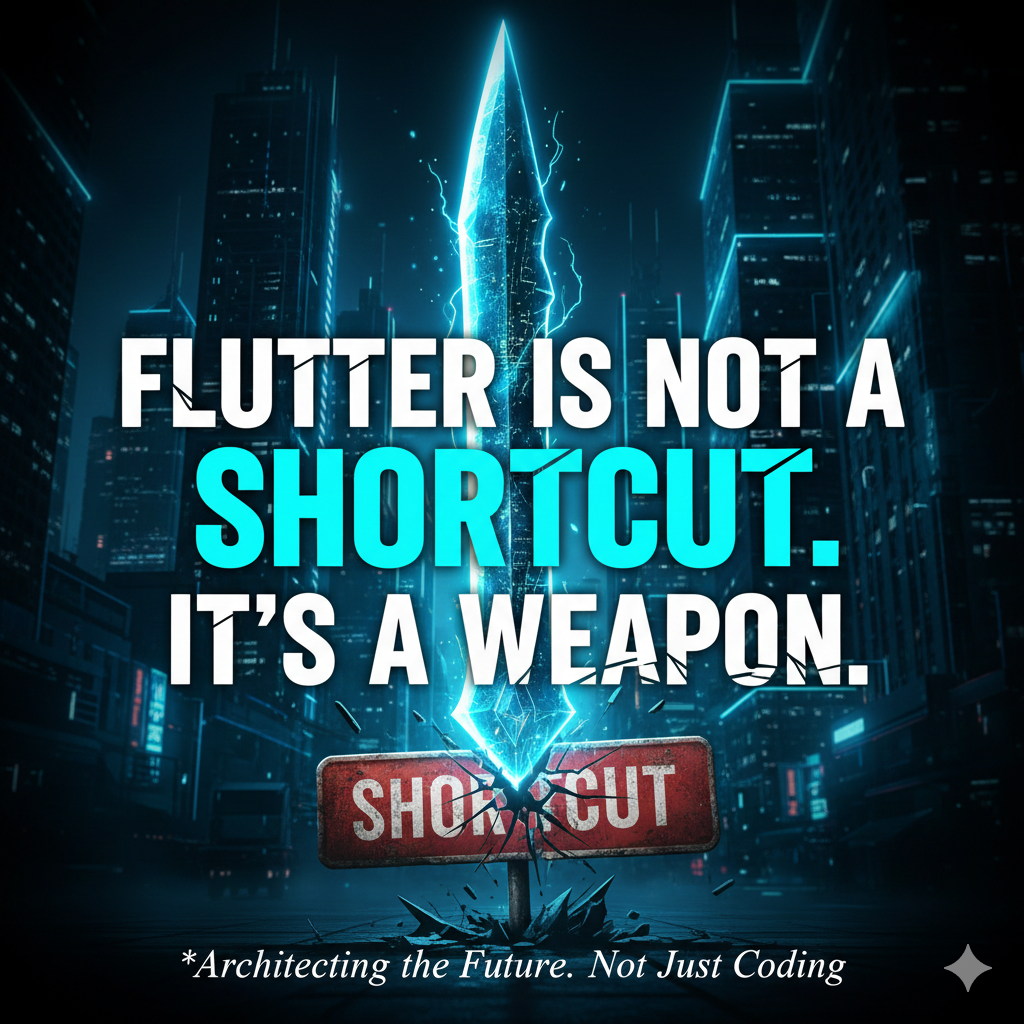
Efficiency is often mistaken for weakness.
In the tech world, “cross-platform” is a word used by people looking for an exit strategy. They want it fast. They want it cheap. They want a shortcut.
But shortcuts don’t survive the market.
I don’t use Flutter because it’s easier. I use it because it’s deadly.
The Illusion of “Native” Superiority
Most developers hide behind the word “Native” to excuse slow cycles and fragmented logic. They build two separate houses on shifting sand.
I build one fortress on a single foundation.
Flutter isn’t about compromise; it’s about unification. It’s the ability to paint every pixel with absolute intent, across every screen, without asking for permission from a fragmented OS.
Strategy is the Only Real Architecture
Code is just the language. The weapon is how you speak it.
Speed isn’t for rushing. It’s for out-maneuvering the competition before they even finish their sprint planning.
Consistency isn’t for aesthetics. It’s for ensuring your brand’s soul is identical on every device, in every hand.
Scalability isn’t a feature. It’s the silent insurance policy that keeps your “What if” from becoming a “What went wrong.”
The Architect’s Choice
A shortcut is what you take when you’re lost. A weapon is what you carry when you know exactly where you’re going.
I’ve seen “Native” apps crash under the weight of their own complexity. I’ve seen startups die because their two teams couldn’t agree on a single vision.
I choose Flutter because I refuse to let a technical limitation dictate a business outcome.
If you’re looking for someone to “just code an app,” look elsewhere.
If you’re looking for an Architect to forge a digital engine that turns your vision into a market-shifting reality, we should talk.